
Key takeaways
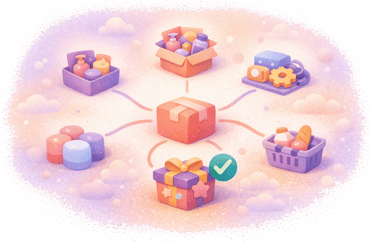
- Product bundle pricing groups items at a price below the sum of the parts. The four strategies are pure, mixed, leader, and captive bundling.
- The bundle-saving range that works in most ecommerce categories is 10-25% off the sum of individual prices. Below that feels like a rounding error; above it erodes margin and trains discount-only buyers.
- The most important pricing decision isn’t the discount - it’s whether to display the saving. “Worth £100, yours for £85” outperforms showing only the bundle price.
- Famous examples: McDonald’s value meal (mixed bundling), Microsoft Office suite (pure bundling), console + game (leader bundling), printer + ink (captive bundling).
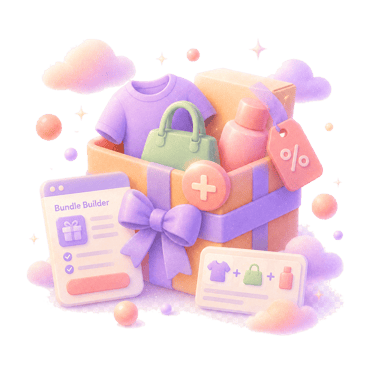
Product bundle pricing is the practice of selling two or more products together at a single price - usually below the sum of buying them individually. Done well, it raises AOV without raising acquisition cost. Done badly, it gives away margin for a small basket-size lift.
This piece covers the four pricing strategies, the discount ranges that actually work, and worked examples from retail.
Why you can trust us
Four years inside Shopify, hundreds of merchants helped on bundle strategy. We build Fudge - the AI storefront editor brands use to ship bundle pages, with a 4.6 rating on the Shopify App Store.
What is product bundle pricing?
Product bundle pricing is a pricing strategy where multiple products are sold together as a single offer at a combined price. The combined price is typically (but not always) lower than buying each item separately.
The mechanism is partly arithmetic - a discount - and partly psychological. The bundle frames the purchase as one decision instead of several, and anchors the buyer on the higher “sum of parts” reference price.
For the broader conversion mechanics, see What Are Product Bundles (And Why They Work).
The four product bundle pricing strategies
1. Pure bundling
Products are only sold together. There’s no option to buy them separately. The bundle is the offer.
Examples: Microsoft Office (you can’t buy “just Excel” on most plans). Cable TV channel packages. A theme park’s all-day ticket. A SaaS plan that includes features you can’t unbundle.
When it fits: when the products genuinely complement each other and individual sales would cannibalise the bundle, or when the products have low marginal cost (digital). Rare in physical retail; common in software and content.
2. Mixed bundling
Products are sold separately and as a bundle. The bundle is one option among several.
Examples: McDonald’s value meal (you can buy a burger, fries, and a drink individually or as a meal). Skincare starter kits where each component is also sold standalone. Pretty much every direct-to-consumer ecommerce bundle.
When it fits: ecommerce default. Mixed bundling captures both the bundle-curious buyer and the single-SKU buyer. The standalone prices anchor the bundle’s saving.
3. Leader bundling
A flagship product is paired with a complementary item at a discount. The flagship leads; the complement comes along.
Examples: Buying a games console and getting a game at a discount. A laptop bundled with software. A mattress with a free pillow.
When it fits: when the flagship is the considered purchase and the complement is the upsell. Lifts AOV without diluting the flagship’s price perception.
4. Captive product pricing
The base product is priced low (sometimes at cost) and a required complement carries the margin. Not strictly a “bundle” - but the same family of strategy.
Examples: Printers sold cheap, ink sold expensive. Razors and razor blades. Game consoles and games (historically). Coffee machines and pods.
When it fits: when the complement is genuinely required, has switching costs, and recurring purchase. Rarely a fit for new ecommerce brands - it relies on customer lock-in that newcomers don’t have.
How much should you discount a bundle?
The most-asked question on bundle pricing has a boring answer: 10-25% off the sum of individual prices is the range that works in most categories.
Under 10% feels like a rounding error. Buyers don’t perceive the saving as meaningful and don’t change their basket because of it.
10-15% is the sweet spot for high-margin categories (skincare, supplements, accessories). Enough to anchor, not enough to erode the brand’s price perception.
15-25% works for lower-margin categories or for gift sets where the discount is the conversion lever.
Above 25% is dangerous. You’re erasing margin, training customers to wait for bundles, and signalling that the bundle is the “real” price - which collapses your standalone pricing.
A specific exception: gift bundles in November-December can run 20-30% off and still pencil because the buyer is acquired on intent that wouldn’t have converted at all without the bundle framing. Different basket, different math.
The most important pricing decision: showing the saving
The discount itself matters less than how you show it.
“Worth £100, yours for £85” outperforms “Bundle price: £85” consistently. The first frame uses the individual prices as the anchor and presents the bundle as a £15 win. The second leaves the buyer to do the maths - which they won’t.
Three rules:
- Show the standalone-sum reference price. Even strikethrough is fine - the point is the comparison.
- Quantify the saving in money, not just percentage. “Save £15” lands harder than “Save 15%” on bundles under £100.
- Show it above the fold. The pricing comparison is the offer - don’t bury it in a checkout summary.
For the design and layout of a bundle page that does this well, see How to Create a Bundle Page in Shopify — includes a 4-minute video walkthrough.
Real-world product bundle pricing examples
These are bundles whose pricing tells the strategy story clearly:
McDonald’s value meal - mixed bundling
The burger, fries, and drink are all sold individually. The meal is a few percent cheaper than the sum. The price isn’t the lever - the framing is. Customers ordering a “meal” never compare against ordering separately; they compare meal sizes. Most ecommerce bundles should copy this approach: visible standalone prices, modest saving, dominant framing.
Microsoft 365 - pure bundling
You buy “Microsoft 365” or you don’t. There’s no per-app pricing for most consumers. The bundle is the only offer, and the pricing per app is implicit but very low because the package distributes cost across N apps the user might not use individually. Works because the marginal cost of bundling software is zero.
Console + launch title - leader bundling
The console is the considered purchase. The bundled game is the upsell. The discount on the game is usually 30-50% off its standalone price - which sounds aggressive, until you remember that the game purchase wouldn’t have happened standalone for many buyers. The math is on the incremental buyer.
Printer + ink - captive product pricing
The printer is priced at near-cost; the ink carries multi-year margin. The bundle here isn’t really an offer - it’s the purchase shape. Customers who don’t read the small print effectively buy ink at high margin for years. The strategy depends entirely on lock-in.
Skincare starter kit - mixed bundling on consumables
Three or four products curated for a skin type at a 15-20% saving. The bundle creates a routine - and the routine is the actual product. The discount serves to anchor the value and remove the “should I get all of these?” decision; the long-term margin sits in the customer continuing to repurchase the routine.
Amazon “frequently bought together” - dynamic leader bundling
Algorithmically generated mini-bundles on the PDP. Discount is usually small or none - the lever is the recommendation itself, not the price. Worth copying as a pattern for any Shopify store: a “frequently bought together” PDP section can lift AOV with minimal margin cost.
How to set up bundle pricing in Shopify
Two cleanly distinct decisions:
1. How do you charge for the bundle?
- A bundle SKU at a fixed lower price (via Shopify Bundles or a third-party app).
- An automatic discount applied when N matching products are in the cart (via Shopify discounts or a configurator app).
- A manual bundle product priced at the bundle total (manual inventory management).
2. How do you present the saving?
This is where the conversion sits. Even a perfectly priced bundle underperforms if the saving isn’t visible. See How to Create a Bundle Page in Shopify for layout patterns, and Best Shopify Bundle Apps (2026) for the app choices.
Common bundle pricing mistakes
Discounting too aggressively. 30%+ discounts collapse standalone pricing and train customers to wait for the bundle.
Anchoring on a fake “RRP”. Inflating the “Worth £X” anchor beyond your real standalone prices is illegal in many jurisdictions and detectable by buyers comparing prices on your own site.
Not displaying the saving. Showing only the bundle price leaves the buyer to do the math. They won’t.
Margin death by free shipping + bundle discount. Layered promotions compound. A 20% bundle discount plus free shipping plus a sitewide 10% code can leave you selling at cost. Cap stacking explicitly.
Bundles that don’t actually save money. A “bundle” priced at the sum of parts is just a multi-buy with extra steps. If you don’t want to discount, sell a “Set” - and skip the bundle framing.
FAQ
Bundle pricing is the practice of selling two or more products together as a single offer at a combined price, usually lower than buying the items individually. The four strategies are pure bundling, mixed bundling, leader bundling, and captive product pricing.
Yes, with one constraint: the "compare-to" price you anchor against must reflect the actual standalone price you sell each item at. Showing "Worth £100" when you've never sold the components at £100 is misleading-pricing territory in the UK, EU, and many US states.
McDonald's value meal is the canonical example - burger, fries, and drink sold individually and as a combined meal at a modest saving. Microsoft 365, console + game offers, and skincare starter kits are other widely-recognised bundle pricing examples.
Most categories work at 10-25% off the sum of individual prices. Under 10% feels like a rounding error; over 25% erodes margin and signals the bundle is the "real" price. Gift-set bundles in peak season can run higher.
Bundle pricing groups different products at a combined price ("Cleanser + Toner + Moisturiser"). Volume pricing discounts multiples of the same product ("3 for the price of 2 t-shirts"). Both raise AOV; they answer different buyer jobs.
Either works, but mixed bundling - keeping the standalone prices and discounting from them - converts better in ecommerce because the standalone prices anchor the saving. Pure bundling (bundle-only, no standalone price reference) leaves the saving unanchored.